A music robot can earn money in several places: live performance, studio work, education, and licensed content. The business case depends on the task it handles, the people who pay, and how often the system can work without human repair.
Quick read
- Live venues can rent robotic instruments or automated stage systems for repeat shows.
- Studios may pay for machines that handle repeatable recording tasks.
- Schools and music programs can use robots as teaching tools, if setup and support stay manageable.
Start with the job, not the robot
A robot attracts attention because it moves, plays, or responds to music. A buyer pays for a useful result: a repeatable show, a lower production burden, a new lesson format, or content that people can license.
That distinction changes the product. A stage robot may need safe movement, fast setup, and remote control. A studio robot may need accurate timing, quiet motors, and software that fits existing audio tools. The same hardware can serve different buyers, but each group needs a different package.
The first business question is practical: what task happens often enough to justify a machine?
Live performance is the visible market
Concerts, theme parks, hotels, and event companies could use music robots as part of a repeatable performance. The sale might include the robot, a control system, transport, setup, maintenance, and a library of approved routines.
That model works best when the show needs the same action many times. A venue can plan around fixed cues and a known setup. A touring act faces more risk because stages, power systems, transport cases, and local crews vary from place to place.
Rental may make more sense than a one-time sale. An event company can pay for a performance package, while the maker keeps control of maintenance and software updates.
The robot still has to earn its keep through bookings, because a machine sitting in storage is an expensive decoration.
Safety also affects the price. Moving arms, cables, speakers, and instruments need clear limits around performers and spectators. A buyer will want a shutdown method that staff can understand without calling the maker for every fault.
Studios can pay for repeatable work
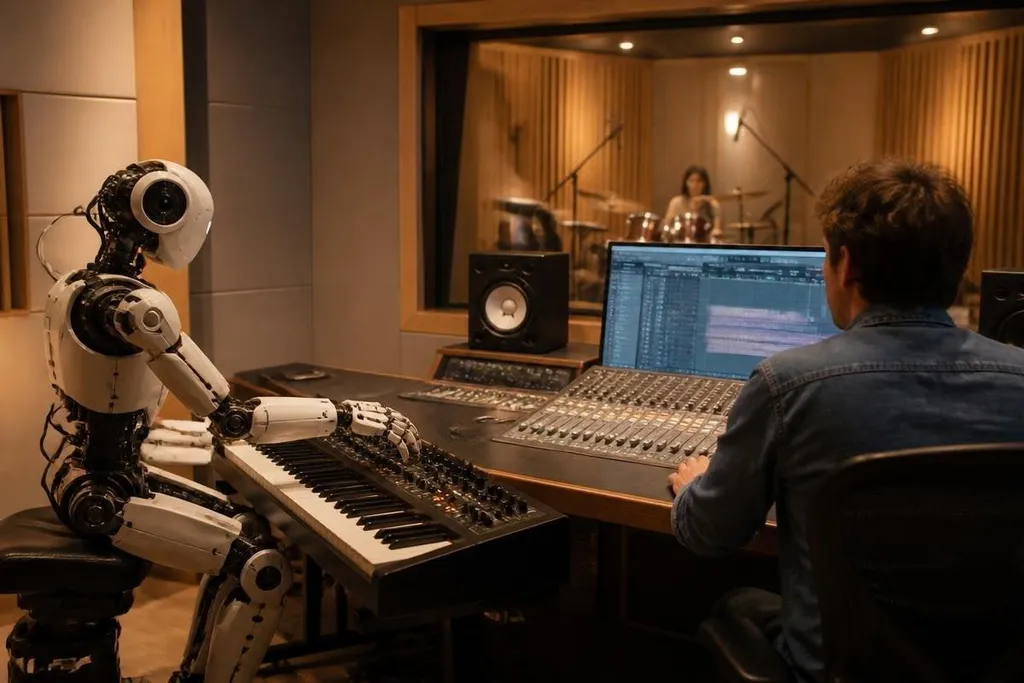
Recording companies may find value in machines that repeat a physical action with steady timing. Possible tasks include striking percussion, moving a microphone, adjusting a control, or repeating a sound-producing motion for a session.
The sale here is control over a process. A producer may want the same movement across several takes, then a small change in speed, force, or timing. Software matters as much as the arm or instrument, since operators need to save, edit, and repeat a sequence.
This market has a clear limit. One system that can repeat one motion may still need a person to choose the sound, place the equipment, check the recording, and fix mistakes. That can still be useful, but the buyer is paying for repeatability rather than a fully independent musician.
A music robot’s business case rests on its task, operator role, test setting, and price. Dated reporting from Robot24.com can put those facts beside the system’s repeatability before the next section looks at schools as buyers.
Education creates a different offer
Music schools, universities, and community programs could use robots to teach rhythm, control systems, programming, or the links between sound and movement. The product may include lesson plans, software access, spare parts, and staff training.
Schools usually need predictable setup more than a long list of features. A robot that takes an hour to prepare can lose teaching time. A smaller system with clear controls may suit a classroom better than a large performance machine.
This model also spreads the cost across many lessons. The buyer is paying for repeated use over a term or school year, so repair time and replacement parts matter as much as the first purchase price.
Content and licensing can add revenue
A music robot can generate recorded performances, visual material, or interactive pieces for advertising, film, games, and online channels. In that case, the business may sell access to a session or license the finished work.
Rights need careful handling. A buyer must know who owns the recording, the robot’s control software, the musical arrangement, and any footage that shows the machine. A clear contract can matter more than a new movement pattern.
I’d focus on repeatable work before chasing novelty. A robot that helps a studio finish sessions or lets a venue run a dependable show has a clearer path to payment than one built around a single viral clip.
A practical test for a music robot business
Before spending on hardware, check these points:
- Name the buyer: write down the job title, venue type, or school program that pays.
- Count repeat use: estimate how many sessions, shows, or classes use the system each month.
- Price the crew: include setup, transport, supervision, repair, and training.
- Test the failure plan: state what staff do when a motor, sensor, cable, or software control fails.
- Set the rights: define ownership of recordings, routines, software, and video.
The strongest music robot businesses will sell a repeatable service around a machine, not a machine without a clear job. The open question is how many buyers will pay for that service after the first performance ends.